Comparing Decking, Stone and Composite for Coastal Patios
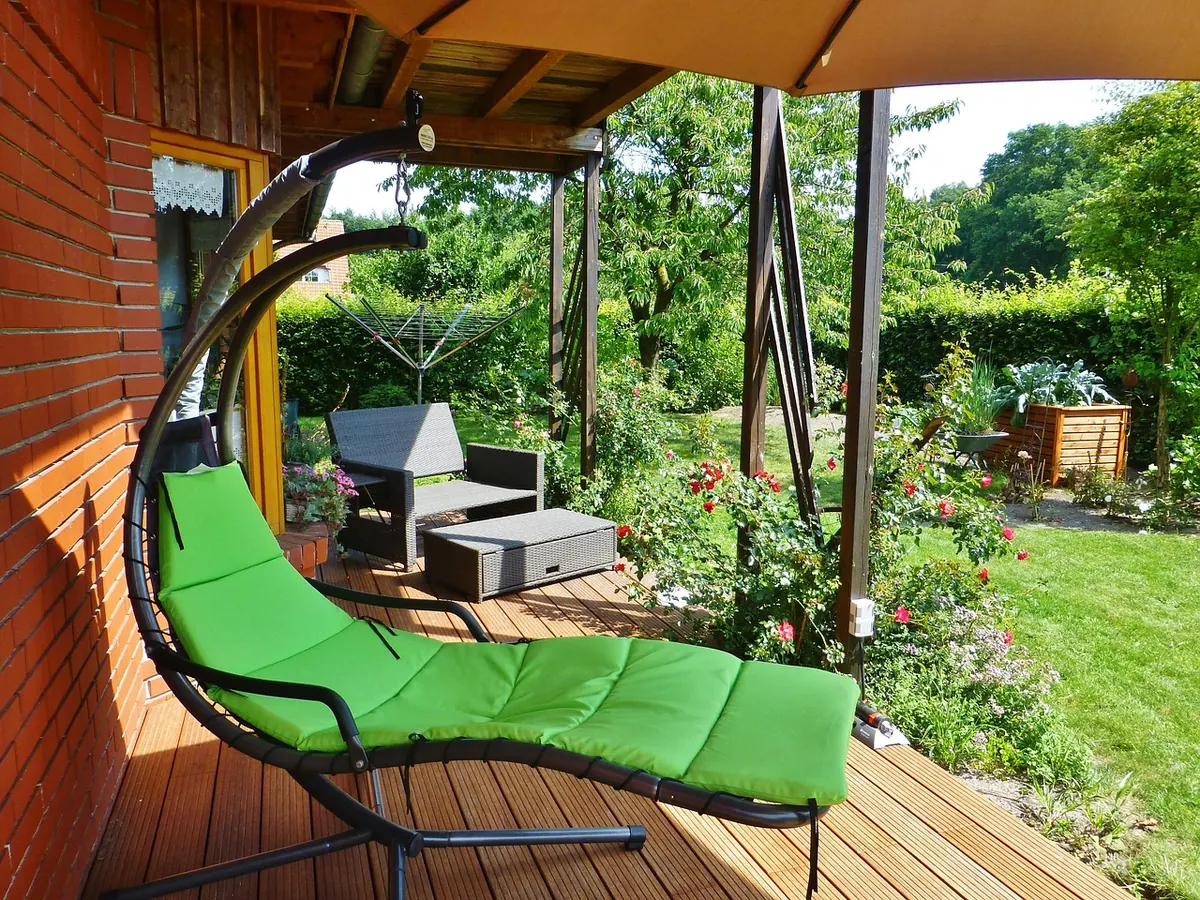
A patio by the sea has to put up with more than a view. Salt spray settles on every surface, wind pushes rain into joints, and sand works its way into gaps like fine grit. A surface that looks smart in June can turn green by January if water sits and air cannot move.
Timber decking, natural stone and composite boards all have a place on the coast. The right choice comes down to how exposed your garden is, how much upkeep you will genuinely do, and whether you care more about barefoot warmth, permanence or a quick scrub-down.
What the coast does to a patio
Salt is the quiet influence. It draws moisture from the air, so surfaces stay damp for longer, especially in shade or after sea fret. That damp film encourages algae and mould. Wind-driven rain forces water into every gap, while UV bleaches untreated timber and fades poorer-quality composites. Sand scours finishes and collects in grooves and joints.
Before comparing materials, note three things about your site: distance from the water, shelter from prevailing winds, and how much sun the patio gets. A south-facing terrace two streets back behaves differently from a north-facing balcony with a direct sea line. Drainage matters as much as the surface itself.
Four pressures are worth planning for:
- Salt: attacks metal fixings, dulls and stiffens sealants, and keeps surfaces damp long after the rain has passed.
- Wind-driven rain: finds every gap, so joints need to shed water rather than hold it.
- UV light: bleaches timber, fades cheaper composites and dries out sealers until they crack.
- Sand and grit: scours finishes and silts up drainage channels and gully covers.
On an exposed coast, the surface that dries fastest usually outlasts the one that looks best on the day it is laid.
Timber decking: warm underfoot, thirsty for care
Timber is the traditional choice, and it still feels the best underfoot. Pressure-treated softwood is usually the cheapest way to cover a modest area. Hardwoods such as cedar, larch or iroko cost more and resist rot for longer, but they still weather to a silver-grey if left untreated. In coastal air, use stainless steel screws and fixings rather than galvanised ones, because salt works through zinc coatings and leaves rust stains bleeding down the boards.
Softwood: cheap, quick and on a clock
Good pressure-treated pine or spruce, laid with a gap of 5 to 8mm between boards, will give years of service if it is cleaned and oiled. Left alone in a salty garden, it has perhaps five or six winters before rot starts at the joists and the board ends. The savings are real, but so is the work.
Hardwoods and modified timbers
Cedar, larch, iroko, cumaru and thermally modified pine all shrug off damp better than softwood. They cost two to three times as much, and they still need occasional cleaning to stop algae taking hold on the shaded side. Some, such as iroko, are dense enough to need pre-drilling for every screw, which slows the whole job down.
Living with timber by the sea
A workable annual routine looks like this:
- Brush or wash off salt and sand in spring, using a stiff brush rather than a pressure washer on full force.
- Treat any green film with a deck cleaner, then let the boards dry completely.
- Re-oil or re-stain with a product suited to coastal exposure, usually in late spring.
- Check fixings and joists each autumn, replacing any screw that has started to weep rust.
If that list sounds like a chore you will skip, timber is probably not your material.
Natural stone: heavy, permanent, cool underfoot
Stone paving asks for the most money up front and the least attention afterwards. It does not rot, it does not fade the way timber or composite can, and a riven surface stays grippy when wet. The trade-off is that it feels cold to bare feet, it is unforgiving if the sub-base is weak, and sandy or made-up ground needs proper preparation before laying.
Which stone where?
- Sandstone: the workhorse of British patios. Riven, slightly textured and reasonably priced, though softer varieties can flake in a hard frost.
- Limestone: tighter and smoother underfoot, so it suits a neat terrace, but it can become slippery where algae settle.
- Granite: near-indestructible and about the best of the lot in a salt-laden gale, with the price tag to match.
- Porcelain: not stone, but it behaves like the tough end of the family and needs almost no upkeep. Choose a textured, anti-slip finish for outdoor use.
Whatever you choose, the pointing matters as much as the slabs. On a coast, a brush-in polymeric jointing compound is often more reliable than cement mortar, which cracks when the ground moves and lets water into the bed below.
Composite boards: the low-fuss option, if you read the label
Composite decking mixes wood fibre with plastic. It never needs oiling, it does not splinter, and it stays cooler than dark timber in strong sun. Cheap uncapped boards, though, are exactly the ones that fade, chalk and grow a stubborn film of algae by the sea. Capped boards, with a protective polymer skin on all four sides, cost more but hold their colour far better and clean up with a brush and soapy water.
What to check before you buy
- Is it capped on all four sides? Boards capped only on top are more likely to swell and stain along the edges.
- What does the warranty actually cover? Look for fade and stain cover, not just structural failure.
- How much does it expand? Composite moves with heat, so end gaps and fixings must allow for it.
- Is the surface textured? A brushed or grooved finish is far safer underfoot when wet than a smooth one.
Comparing the three at a glance
- Timber: warmest underfoot and cheapest to start, but the highest maintenance and the shortest life in full exposure.
- Stone: the biggest outlay and the heaviest job to install, but the longest life and the least fuss once it is down. Cold underfoot.
- Composite: a middle price with very little upkeep, decent barefoot comfort and no splinters, provided you buy capped boards rather than budget ones.
Drainage and ventilation matter more than the surface
Whatever you lay on top, what sits underneath decides whether it lasts. A patio that traps water against the house will cause damp indoors, and a deck built flat onto the ground will rot from the bottom up no matter how good the boards are.
- Fall the finished surface away from the building at roughly 1 in 80 to 1 in 100, so water runs off without looking visibly sloped.
- Keep timber decking at least 150mm above the ground, with air able to move beneath it.
- Keep paving below the damp-proof course of the house, with a gravel-filled gap between slabs and wall.
- Clear gullies, channels and drainage slots each spring, because sand will have filled them over winter.
A coastal patio is judged not on the first summer, but on the third winter.
Cost, upkeep and the five-year view
Upfront price is the easy comparison. The honest one adds up the hours and the money you will spend keeping the surface usable.
- Year one: softwood decking is comfortably the cheapest; stone is the most expensive once labour and sub-base are included.
- Year five: the gap narrows. Oil, cleaner, stain, replacement boards and rusted fixings all add to the timber bill.
- Year fifteen: a well-built stone terrace is usually still doing its job, while softwood decking will almost certainly have been replaced once.
If you plan to move within three years and want the space usable now, timber or composite makes sense. If you intend to stay, and you would rather not think about the patio again, stone earns its price.
Choosing for your site
Work through these in order and the decision usually makes itself:
- How exposed is it? A direct sea line with no shelter pushes you towards stone, porcelain or capped composite. A sheltered courtyard opens up cheaper options.
- How much shade? Shaded, north-facing surfaces stay wet, which is bad news for timber and for uncapped composite.
- Bare feet or boots? Children and dogs favour timber or composite. Stone is cooler and harder.
- Who does the maintenance? If the honest answer is nobody, rule out untreated timber now.
- What is the budget for the base, not just the surface? A good third of the cost of a decent patio often sits underneath it.
No material is wrong for the coast. Each one just asks for a different kind of commitment: time, money or patience. Match that to the way you actually live, and the patio will still look well when the next winter storm has passed.
Photo: Counselling / Pixabay